

Colour in focus
When the composition takes a back seat

A reader, Joanne Munro left a comment on my last piece looking at B&W “I generally only shoot in colour when the colour is the subject of the image.” I think that’s a great point, and certainly something that I do too, and set off a train of thought of my own.
The last two posts here have been about the choice between black and white and colour – two ways of handling the same scene, each carrying different meaning or compositional impact. But photographs where ‘greyscaling’ isn’t an alternative treatment, it’s a removal of what makes them work, and sometimes the very point of why I took the photo. Strip the colour out and the image ceases to be worth exploring.
So for this post I wanted to explore where colour isn’t a treatment or a side note. Where colour is the subject, or transforms the subject in a fundamental way.
One of my favourite photographers, Ernst Haas, worked this out decades ago, of course. His experiments with reflections, blurs, close-ups, fragments of life – devices to elevate the literal subject and reach toward something more painterly - he sought to ‘paint with light’. This approach seems idealistic and is easy to forget or let go of as being too hard. But it’s an old conversation worth rejoining, particularly when most photography advice still treats colour as something that just happens while you’re shooting the subject, rather than as the subject itself.
So what is colour-as-subject actually doing? I’ve included four examples from some April wanderings in London – starting points, not categories. Colour-as-subject has infinite variations!
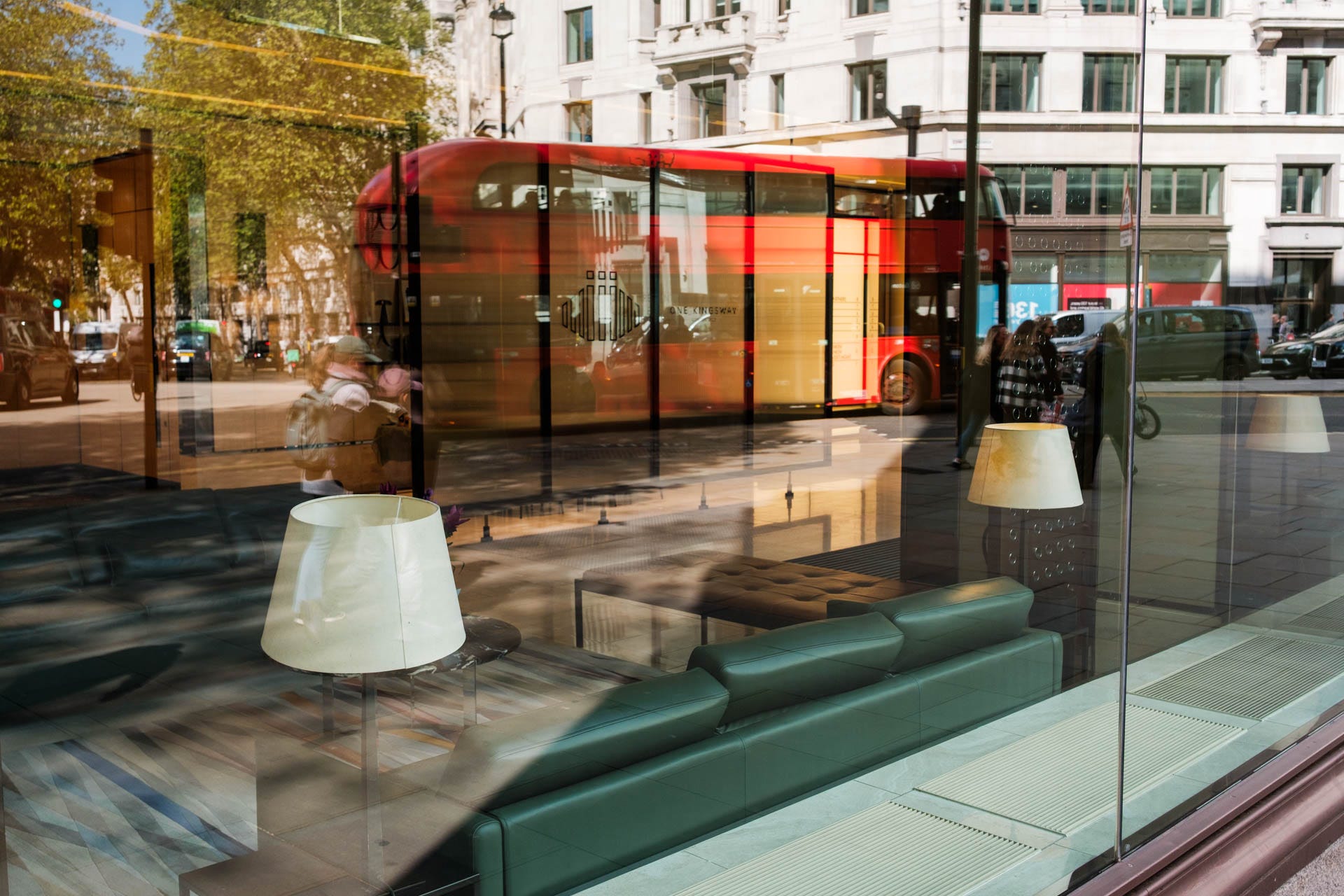
The first image (top), opposite One Kingsway on the Strand, is colour as collision. A red bus and a sunlit hotel interior layered through glass, pedestrians in between the two. Scenes meeting, colours colliding on a single plane for a moment. None of it works in B&W – it would lose the layering and contrast of hues.
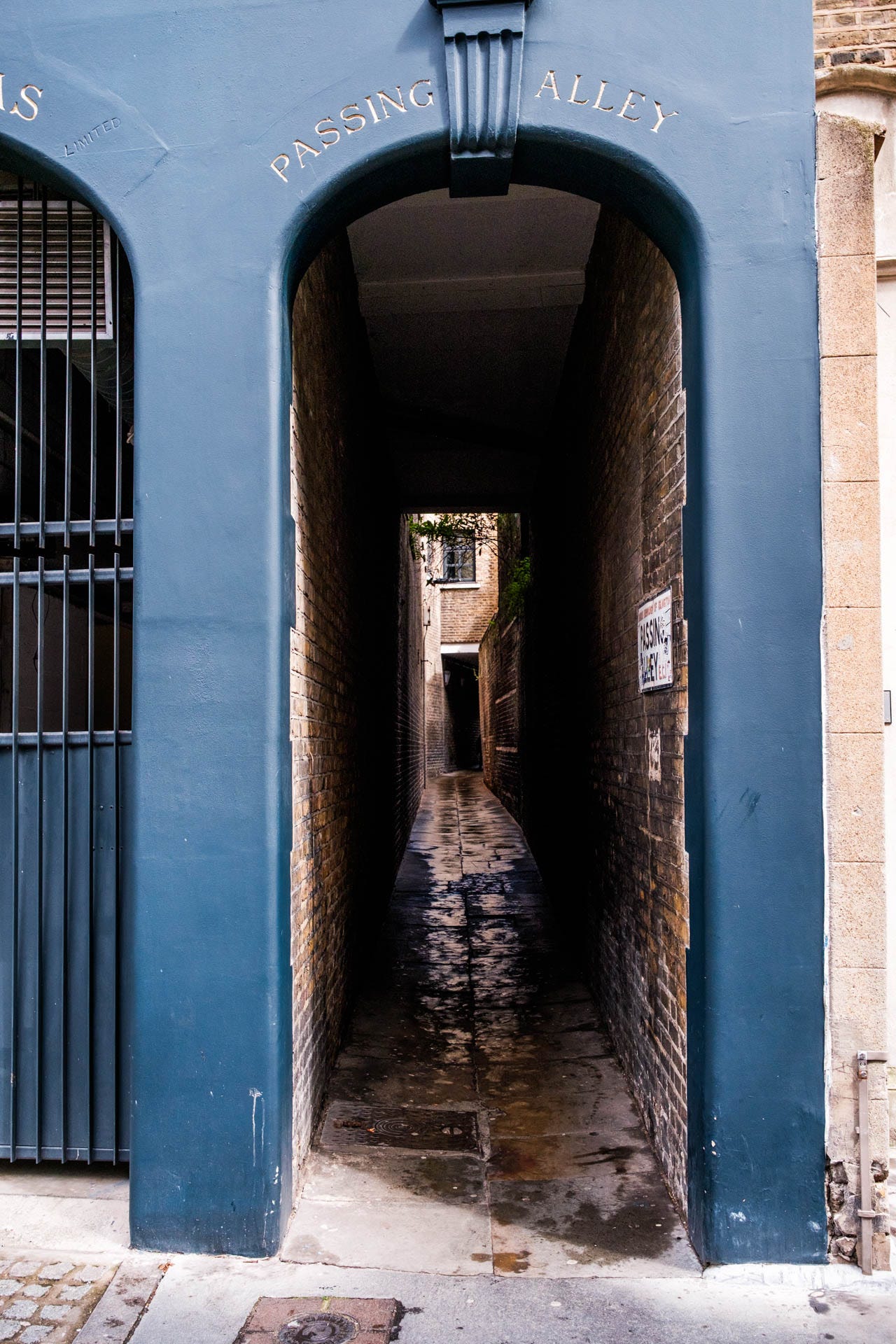
Passing Alley (above) is colour as frame, as mood-setter. That deep blue archway tells you what the photograph feels like before you’ve taken in any other detail. Strip the blue and you might have a OK greyscale alleyway, but not nearly as good or as rich an image.
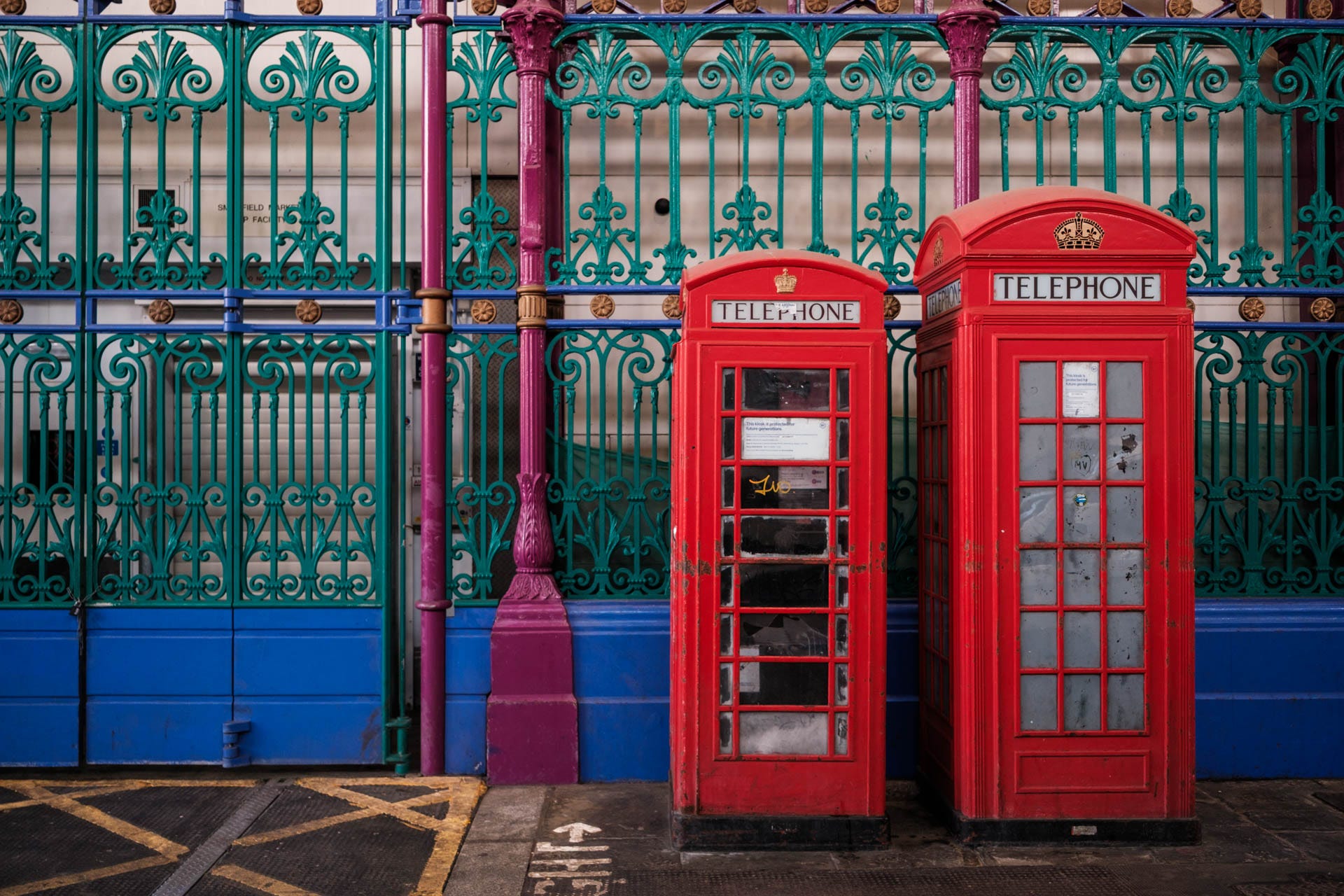
The Smithfield phone boxes are colour as celebration, glorious in their own right surrounded by painted metalwork – all shouting. The phone boxes have some interesting shapes in B&W, but it certainly wouldn’t stop you with the same impact.
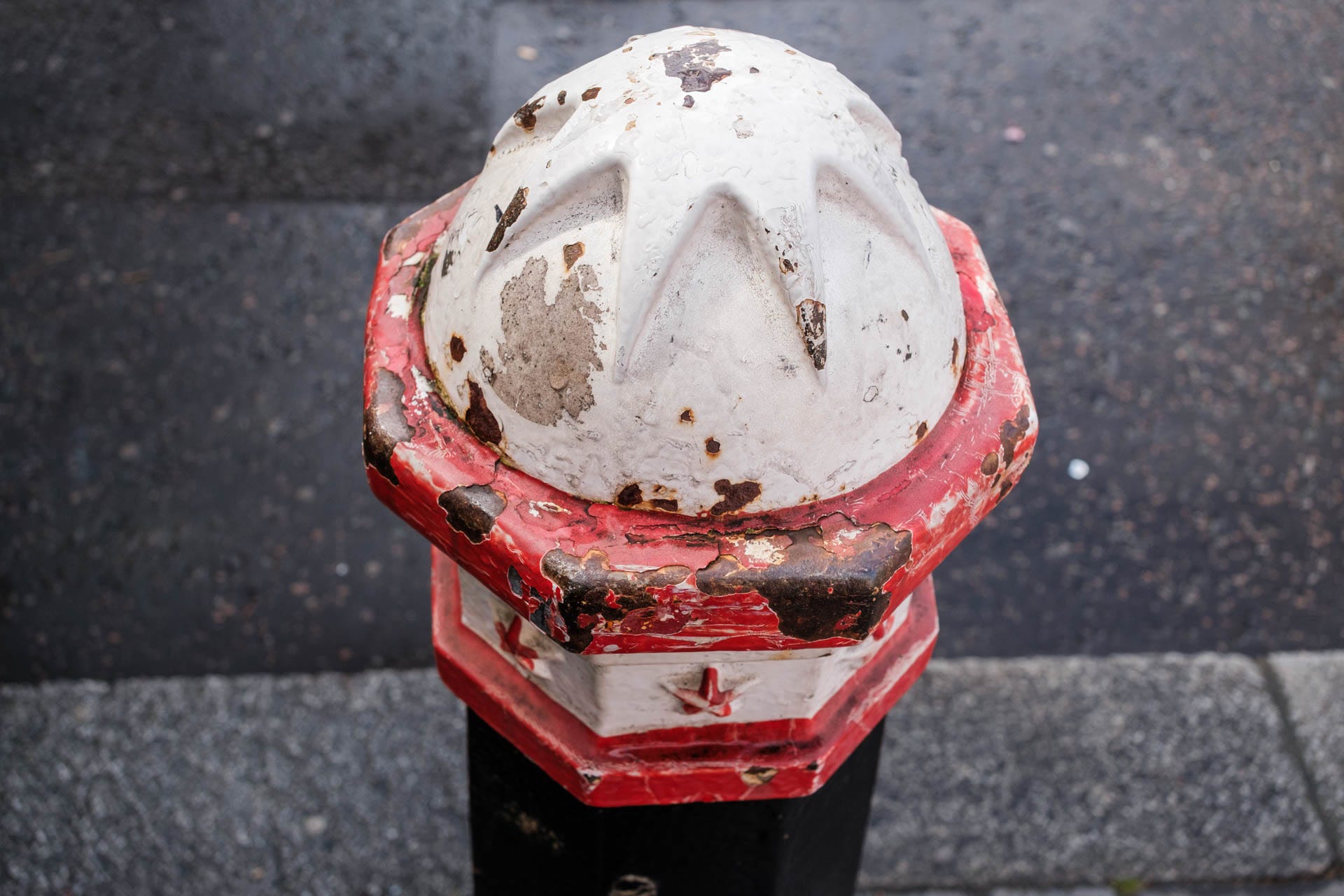
This bollard is an even simpler example of colour working hard. Little to no composition – a centred object on a flat street background. But the chipped white-on-red, the rust and attrition of time and use eating into the paint, this makes the colour and texture inseparable, competing but neither winning, both conveying a little glimpse of London history and present reality.
I do have a penchant for textures too, but that’s maybe for another post.
We see in colour. So shooting in colour carries a counterintuitive risk as a photographer or artist – getting too close to everyday experience. The viewer looks and thinks: yes, that’s what the world looks like, what should I be focusing on? It makes it harder to elevate the image for the viewer. Colour photography works for me when it has gone in one of two directions – toward a clearly composed version of a scene (heightened, focused, simplified) or push further from it (abstracted, fragmented, painterly). The middle ground is where colour photos lose the power of their full potential.
The practical thing I want to leave you with is this. Thinking about colour in itself highlights why you shouldn’t be constrained by overthinking composition or waiting for the right moment. The image that resonates sometimes only shows how good it is after the moment – in the edit, in a print or on the screen at home. When you pick up the camera to your eye, look for not just what looks good but what makes you feel the moment around you.
What do you think? Do you, like myself and Joanne often prefer colour as the subject – or does it remove too much context, strip things back too far?